
How The College of St. Scholastica’s Physician Assistant program uses Osmosis as an essential component of their longitudinal curriculum.
The Program
St. Scholastica’s Physician Assistant program is committed to preparing excellent PAs to meet the needs of rural Minnesota and surrounding states. “Our students have a longer primary care rotation. Some of them are starting to even do longitudinal rotational tracks where they spend multiple rotations in the same rural community so they get to know the community and become more embedded there,” explains Shawn Garvey, Director of Curriculum Development.
In support of the school’s dedication to faculty involvement at every stage of the learning process, Program Director, Dr. Kimberly Lakhan, dedicates time to teaching courses. St. Scholastica’s small program size and innovative curriculum, paired with its state-of-the art technology and simulation center, provide students with many personalized learning opportunities.
The Challenge
Equipping faculty and students with resources that support the PA programs longitudinal curriculum.
Each year, students expressed a desire for resources that would help them prepare before beginning PA school. This prompted the faculty at St. Scholastica to identify “content for incoming students they can access before they start their program,” according to Ms. Garvey.
In addition, like many PA programs across the United States, St. Scholastica experienced significant faculty transitions in 2021, including retirements and extended faculty vacancies. Maintaining a curriculum built primarily on PowerPoint presentations, lectures, and course packs that required frequent updates became increasingly inefficient and unsustainable. The program recognized the need for a comprehensive, reusable content library that could support learning throughout the curriculum while minimizing the ongoing demands of content maintenance. “We needed a way to provide consistent content year over year to students that faculty did not have to review and update,” shared Gravey.
Beyond the curriculum, PANCE® preparation remains a key priority for both students and faculty. “Our goal is to find resources that help students review for examinations, get them acclimated to beneficial clinical year and rotation study tools, and prepare for PANCE® exams,“ says Garvey. “We’re trying to form good study habits right away in the didactic year.”
The Solution
Integrating Osmosis videos and assessments to support learner readiness, active classroom engagement, and longitudinal knowledge reinforcement.
Faculty at St. Scholastica have created curated playlists of Osmosis videos and linked assessment items to support student learning from day one. Students regularly complete assigned playlists before class, enabling more meaningful participation and higher-level discussions during in-person sessions. Dr. Lakhan has observed that Osmosis videos help students arrive better prepared, enhancing the quality of classroom engagement. The playlists serve as valuable resources for both pre-class preparation and post-lecture reinforcement. As Dr. Lakhan notes that students “seem to be better prepared for the lectures. Tthat part is really, really nice. I’m not trying to teach them material from scratch. They’re actually doing their prep-work.”
Following class, Osmosis has become an important resource for review and concept reinforcement. Garvey frequently meets with students who need additional support mastering challenging topics. She encourages students to independently review the relevant Osmosis video before meeting with her to discuss the material. “It has saved me time instead of having to sit down and reteach a whole topic that a student missed,” Garvey shares. This approach promotes greater student ownership of learning while making faculty-student interactions more productive and focused.
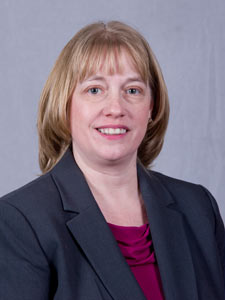
“I have a lot of meetings with students who are struggling or doing remediation. Osmosis is one resource that I always ask them if they’re using. If not, I recommend that they start.”
Shawn Garvey, MS, PA-C, DFAAPA, Director of Curriculum Development and Assistant Professor
Garvey has also found the video transcripts valuable for exam development and content validation, “I love being able to scan through the video transcripts quickly, so I can find the piece I’m getting ready to test on and see if there’s anything in there that would be inconsistent with what is covered in class.” Before assessments, she proactively addresses any differences in how concepts are presented and explains the rationale behind those variations. This process encourages critical thinking, highlights differences in clinical practice, and reinforces confidence in the Osmosis resources being used. “It really helps when students know that this is not just something we are sending them off to do. We are participating with them in using the resource.”
The Result
Expanding LMS integration to seamlessly embed Osmosis content and assessments throughout the curriculum.
As faculty at St. Scholastica have expanded their use of Osmosis, they saw opportunities to deepen integration by embedding content directly within their learning management system. This approach would create a more streamlined learning experience for students while better supporting the curriculum.
Garvey explains the goal, “If we get to a point where we are pulling Osmosis into the learning management system, and it is very laid out to students, ‘read chapter 42, watch this video,’ it will replace some of the foundational work that we no longer have to do in lecture. Faculty will be able to move lectures to the next level and spend more time on application.”
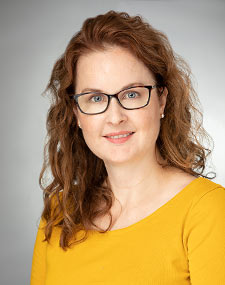
“It’s been a really helpful tool for creating and sharing a playlist for the students as a supplement. Then they have both preparation before the lecture, as well as, a different perspective to listen to after
the lecture.”
Kimberly Lakhan, DHSc, PA-C, DFAAPA, PA Medicine Program and Department of Medicine Director and Associate Professor
Looking ahead, the program is also exploring the integration of Osmosis question banks and flashcards into course modules to further strengthen knowledge retention, reinforce key concepts, and support improved learning outcomes.
Dr. Lakhan and her team are excited about the progress they have made toward their broader vision for curriculum transformation. “Knowing that the Osmosis team is there and willing to work with us is a big part of that. I’ve really appreciated the team’s willingness to work with us and to brainstorm, and when we’ve come with questions like the LMS integration, it’s been a ‘yes, let’s see what we can do!’”
With deeper integration of Osmosis across the curriculum, the St. Scholastica PA program aims to enhance curricular consistency, increase student engagement, and foster more meaningful scholarly discussion. By leveraging Osmosis as a foundational learning resource, students are better positioned to develop higher-order thinking skills earlier in their education. As Dr. Lakhan notes , students are “thinking at a higher level. It’s big-picture from the very beginning, as opposed to having to go back and teach them how to integrate all the different individual pieces.”