
How A.T. Still University School of Osteopathic Medicine is leveraging learning science to shift from passive to active learning.
The Program
Founded in 1892 as the American School of Osteopathy, the institution became the first school of osteopathic medicine and later evolved into A.T. Still University (ATSU) of Health Sciences in 1998. Today, ATSU is recognized for its leadership in multidisciplinary health professions education, innovative curricula, and commitment to whole-person healthcare. With nearly 4,000 students across campuses in Missouri, Arizona, and California, ATSU has a longstanding history of leveraging educational technology to enhance the learner experience.
Dr. Ted Wendel, President of the Arizona and California campuses, has consistently championed innovative approaches to health professions education. At a time when online education was still gaining acceptance, the program faced skepticism from both learners and healthcare professionals. “There was a lot of frustration because people didn’t believe you could learn that way. But we persevered because it was a great education,” shares Dr. Wendel.
In the years that followed, Dr. Wendel and ATSU continued exploring how advances in educational technology and learning science could create more effective and efficient learning experiences for future healthcare professionals.
The Challenge
Moving from a passive, lecture-based model to an active learning environment that puts students in control.
Dr. Wendel explains, “I realized a lot of the problems with traditional education, of sitting people in a room, was inefficiency. I could put a hundred people in a room and spout information at them, but it wasn’t the best way, especially in the health professions, because you started at eight in the morning and went until four o’clock in the afternoon. And people stop listening after the first 12 minutes. We knew we had to break this up a little bit, make students a more active participant in the education process, not a passive receptacle.”
Recognizing the importance of active learning, ATSU began incorporating learning science principles into its educational approach. A key focus was organizing content into smaller, more manageable learning units, also known as content chunking, to help students master and retain the significant volume of knowledge required for clinical practice.
As Dr. Wendel and his team restructured content into focused learning objectives, they observed increased student engagement and improved comprehension of complex topics. Faculty across the institution also began to recognize the value of this approach. As Dr. Wendel noted, “More and more people were realizing that doing it in short, succinct punches was really effective and the students liked it.”
As ATSU continued moving away from a lecture-centric curriculum, the next challenge became identifying a partner that could provide high-quality, learning science-based resources that supported both faculty and students while integrating seamlessly into existing curricula.
The Solution
Partnering with Osmosis to support ATSU’s evidence-based educational model.
Dr. Wendel recognized strong alignment between ATSU’s educational philosophy and the Osmosis platform. Its foundation in learning science principles mirrored many of the approaches he had already seen succeed within health professions education.
ATSU saw an opportunity to strengthen its active learning environment through a scalable and comprehensive educational resource. Rather than requiring faculty to create and maintain their own supplemental materials, Osmosis provided access to an extensive library of visual learning resources, including videos aligned with flashcards and exam-style assessment items designed to support knowledge acquisition, application, and retention.
Dr. Wendel explains his thinking: “Let’s create the curriculum, but let’s not recreate what already exists. Let’s use Osmosis.” Faculty responded positively to a resource that offered engaging, visually driven content tailored to health professions education. Dr. Wendel reflected on previous efforts, stating, “Everything else we tried before Osmosis either was somebody lecturing on a screen, which was no better than a faculty member doing it, or it wasn’t packed right. It wasn’t focused on the type of discipline I was trying to create.”
Osmosis’ comprehensive content library supports multiple health professions programs, including osteopathic medicine, physician assistant education, nursing, and other clinical disciplines. The concise format of its videos also aligns with ATSU’s goal of delivering content in manageable chunks, allowing students to absorb information effectively without becoming overwhelmed.
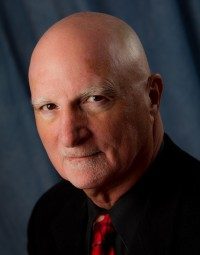
“Osmosis came in with short, hard-hitting videos that I could integrate into a curriculum, so we don’t have to recreate
something that already exists.
Dr. Ted Wendel, PhD, President of Arizona and California campuses
Because content is organized by specialty and topic area, ATSU faculty were able to integrate Osmosis into individual programs with ease. As Dr. Wendel explained, “Osmosis came in with short, hard-hitting videos that I could integrate into a curriculum, so we don’t have to recreate something that already exists.”
He further emphasized the platform’s curriculum integration capabilities: “The way that Osmosis has been able to integrate learning and the use of Osmosis tools into existing curriculum is another thing. It doesn’t just sit out here on the side. It’s right there within what I have to learn. And I’m not doing a commercial for Osmosis – but I haven’t seen that anywhere else.”
Improving learning outcomes through continuous, low-stakes assessment.
Another key component of ATSU’s strategy was leveraging the testing effect through regular opportunities for retrieval practice and low-stakes assessment.
As a longitudinal learning resource, Osmosis combines instructional content with practice questions and flashcards, enabling students to immediately apply newly acquired knowledge. This approach reinforces learning while helping students identify areas that require additional review. “The flashcards help students decide whether they know they’ve accomplished an objective. We’ve got this set of cards, or assessments, that they can use to test their knowledge,” says Dr. Wendel.
He also emphasized the importance of repeated practice in preparing students for formal assessments and licensure examinations: “The other reality is that they do have to pass tests eventually here, board exams, and our own multiple choice curriculum. And the best way for students to be successful is to answer a lot of questions.”
The Result
Students are taking advantage of the learning science behind Osmosis to retain more information in less time and recall that information when they need it most.
Students quickly embraced Osmosis as a core component of their learning experience, often recommending resources to one another and incorporating videos into their independent study routines. Rather than rewatching recorded lectures, many students turned to Osmosis for concise, targeted review. “When I sit down and talk to students I always ask what resources they use the most. Osmosis is always the first thing they talk about, which empowers the students” says Dr. Wendel.
Today, Osmosis is available across eight ATSU programs and supports more than 1,500 students. With an average of 5,500 videos viewed and 1,386 multiple-choice questions completed each month, the platform has become a widely adopted resource throughout the institution.
Beyond utilization metrics, Dr. Wendel measures success through the learner experience and long-term professional development. “Success for me is two things: One is that the students say it’s the best educational experience they’ve ever had. That’s my first goal. The other is that they continue to use a resource like Osmosis or other things beyond graduation. That second part of success is giving the students the ability to efficiently and effectively continue to learn.”
With the addition of Category 1 CME credits for eligible Osmosis activities, ATSU graduates have opportunities to continue engaging with the platform as part of their lifelong learning journey.
Looking ahead, Dr. Wendel believes technology-enhanced, active learning models will continue to influence the future of health professions education. “Eventually students are so ingrained in the use of technology that they are re going to influence how faculty feel about education. And eventually those students will become faculty and things will change a lot faster when that happens.”