How A.T. Still University’s Physician Assistant Program uses Osmosis to free up faculty time and deepen student learning.
The Program
A.T. Still University’s Physician Assistant Program prepares exceptional physician assistants through an educational model grounded in the osteopathic philosophy of whole-person care. The program’s learner-centered curriculum fosters self-directed learning through integrated didactic and clinical experiences, including opportunities to serve in medically underserved communities. This approach cultivates clinical excellence, compassion, and a commitment to addressing healthcare disparities. As Professor and Chair of the Department of Physician Assistant Studies, Dr. Ray Pavlick is dedicated to advancing evidence-based teaching practices that enhance student engagement and learning outcomes.
The Challenge
Creating more opportunities for higher-order learning to optimizing classroom time for critical thinking, clinical reasoning, and the application of knowledge.
Faculty in ATSU’s Physician Assistant Program sought effective instructional approaches to promote deeper learning and maximize the educational value of classroom time. “Students are great consumers of information. The bigger challenge is, ‘okay what do I do with all of it, how do I apply this to a real-life patient?’” shares Dr. Pavlick. With this goal in mind, ATSU faculty sought to dedicate more instructional time to developing students’ clinical reasoning and ability to apply foundational knowledge in authentic patient care scenarios.
Faculty also recognized the importance of preparing students for a career of continuous professional development, and aim to equip them with the self-directed learning skills needed to adapt to ongoing advances in medicine. “Students have to discover self-learning and be motivated to stay up-to-date as things change,” says Dr. Pavlick.
The Solution
Integrate Osmosis to give faculty flexible options to assign and monitor student asynchronous learning.
Assigning engaging Osmosis videos as pre-work helped prime learning before class, allowing faculty to begin at a more advanced level and dedicate more time to application-based learning and collaborative problem-solving.
Even before the COVID-19 pandemic disrupted in-person instruction, faculty leveraged blended learning strategies and on-demand educational resources to support didactic learning. Following the adoption of Osmosis, Dr. Pavlick and his colleagues developed curriculum-aligned playlists and assigned them as pre-class learning activities. Osmosis provides faculty with access to student engagement analytics, enabling them to monitor content completion, assess learner preparedness, identify areas of difficulty, and tailor in-class instruction to address students’ learning needs more effectively.
“Students like having a lot of tools and a lot of different ways to learn. Osmosis videos, flashcards, questions, notes, and more have provided a ‘one stop shopping’ experience for students,” says Dr. Pavlick, “The more tools they have, the more engaged they are. Variety is key in keeping them engaged and Osmosis has provided that.”
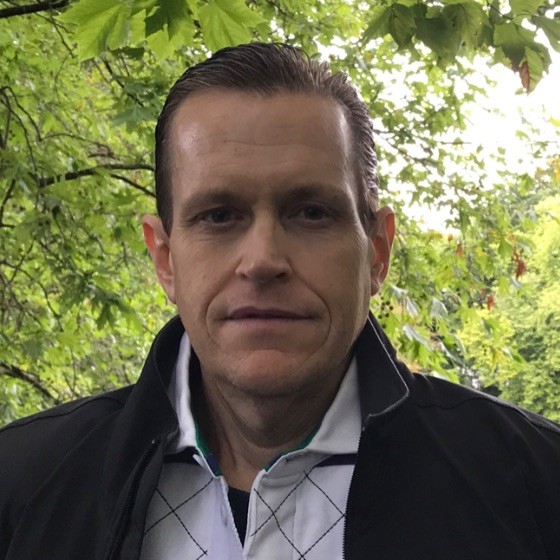
“Osmosis videos, flashcards, questions, notes, and more have provided a ‘one stop shopping’ experience for students. The more tools they have, the more engaged they are. Variety is key in keeping them engaged and Osmosis has provided that.”
Dr. Ray Pavlick, PhD
Professor and Chair of the Department of Physician Assistant Studies
The Result
Physician assistant students used Osmosis throughout their educational journey to access learning resources anytime, anywhere, and the platform’s success led to adoption across all ATSU campuses.
Together, ATSU and Osmosis are creating a more modern and engaging educational experience. “The artistic style that Osmosis uses is catchy and it helps students remember the content. I find myself cutting and pasting images from the videos and using them in class presentations because I know that the students will remember them,” says Dr. Pavlick.
Osmosis continues to provide visually engaging, reliable content on a platform that students can take on-the-go for continuous learning and success. Dr. Pavlick notes, “We have seen students at the gym watching Osmosis videos on the treadmill. Some students commute and carpool; if it is not their day to drive, they can sit in the backseat and watch videos. The students love to be able to multitask and use the Osmosis app to listen and watch videos anywhere.”
Due to the high levels of engagement among students and faculty, support for Osmosis spread throughout the institution spearheaded by the university’s senior leadership, Dr. Ted Wendel. Now Osmosis is used at all campuses and within eight health science disciplines, from Osteopathic Medicine to Physical Therapy.
When asked if he’d recommend Osmosis to other health professions programs, Dr. Pavlick says, “If you’re at all hesitant, don’t be. I know there are some risks that are taken when you are trying something new for the first time, but for us, Osmosis is really opening faculty and our students eyes,” about the power of video-based learning in the curriculum.