Discover how the University of Virginia School of Medicine leveraged Complete Anatomy to prime learning, support real-time dissections, and reinforce understanding
The Program
The University of Virginia (UVA) School of Medicine cultivates a learning environment centered on collaboration and hands-on experiences, with a strong focus on service and enhancing patient care quality. As an early adopter of a systems-based curriculum, UVA significantly reduced traditional anatomy lecture hours, shifting the emphasis to immersive anatomy lab instruction.
The Challenge
UVA faces several widespread challenges common in anatomy education today. One such challenge is a large portion of incoming medical students arrive without prior anatomy coursework, making it essential to introduce
foundational anatomy concepts in an accessible and effective way.
Additionally, the transition to a systems-based curriculum has reduced anatomy instruction time by half, requiring
faculty to deliver essential anatomical knowledge within a shorter timeframe.
Increased class sizes have further complicated access to anatomy labs. To accommodate this, students are divided into two groups that alternate lab sessions within a four-hour block. As Dr. David Moyer, DC, Assistant Professor of Medical Education at UVA, explains, “Half the class starts the dissection and is in the lab for two hours. Then, the other half of the class completes the dissection for the remaining two hours. Students are either starting the dissection or finishing it.” This format leaves little room for subject introductions. “We no longer have an hour of introductory lecture, followed by two hours of lab time. All the preparation for any given dissection lab is done by each student on their own time.”
The Solution
To address these challenges, UVA focused on developing a suite of effective resources that students could use both before lab to prepare and after lab to reinforce their understanding.
Dr. Moyer encountered a common obstacle when evaluating existing digital anatomy tools, “I’ve demoed
many different anatomy software programs during my career. The problem I had with all of them was that I
couldn’t easily integrate them into my curriculum. This is where Complete Anatomy had a solution.” The turning
point came during discussions with the Complete Anatomy team, who introduced Dr. Moyer to Deep Links, faculty
created, shareable links to specific screens and content, that fit seamlessly with his teaching needs.
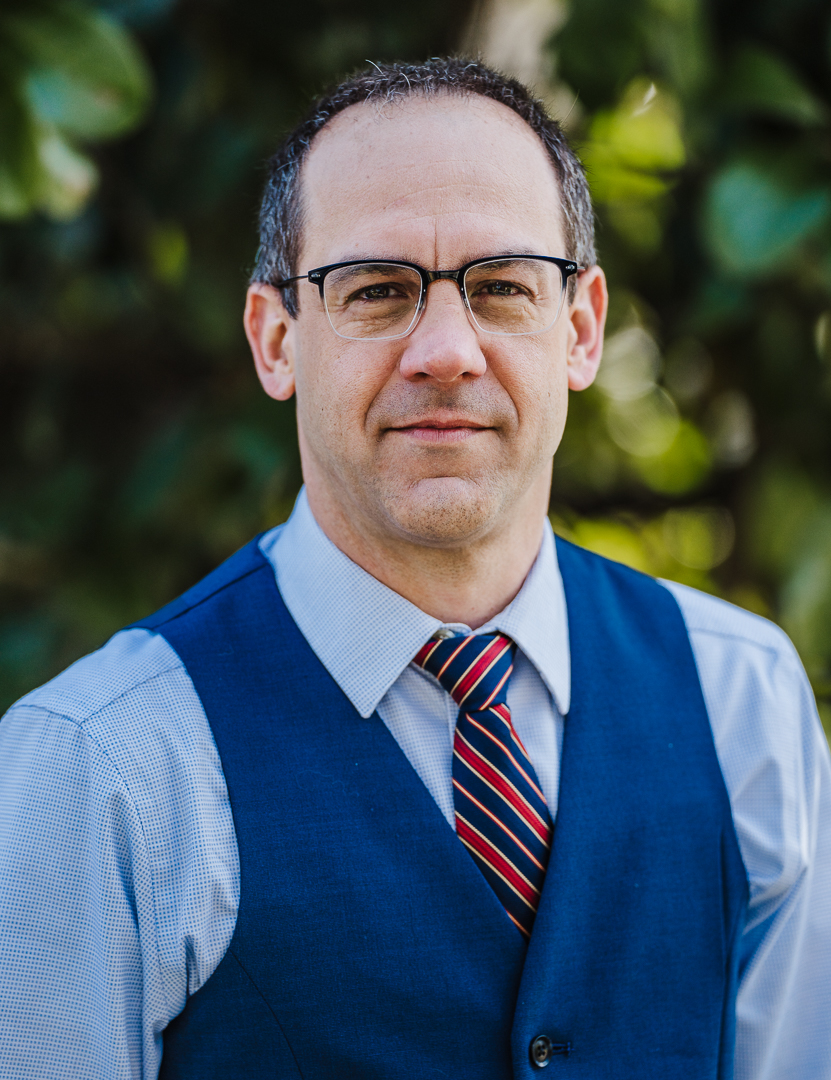
“I’ve demoed many different anatomy software programs during my career. The problem I had with all of them was that I
couldn’t easily integrate them into my curriculum. This is where Complete Anatomy had a solution.”
Dr. David Moyer, DC
Assistant Professor of Medical Education
Another key attraction was Complete Anatomy’s ability to present a consistent, idealized anatomical model. Dr.
Moyer shares, “I like an ideal model of anatomy for the beginning student. If you know what perfect anatomy is,
you can compare everything to it. I like students starting with Complete Anatomy, so when they get to their cadaver they can start comparing the anomalies they see to what they originally saw on Complete Anatomy.”
In 2018, UVA began an institutional partnership with Complete Anatomy, integrating the resources as a core digital tool. With Complete Anatomy, Dr. Moyer designed over 500 anatomy models aligned with learning objectives to embed in faculty-developed dissection instructions and PowerPoint handouts. He explains, “Complete Anatomy Deep Links allow me to export images of Complete Anatomy models and insert them into my PowerPoint handouts. Students can read my anatomical descriptions in the PowerPoint Handouts and see the corresponding anatomy on that model."
The Result
Complete Anatomy has become an essential, widely adopted resource at UVA, providing students with tools that prime learning before class and reinforce knowledge afterward to better prepare for key exams. Embedding Complete Anatomy Deep Links into course PowerPoint handouts was critical to student adoption. As students’ progress through the handouts, they can click the links to explore models in more depth or from different angles. Dr. Moyer explains, “That’s how I knew I could get students using Complete Anatomy quickly and easily. Students learn how to use the software because I integrated it into my handouts.”
“For Faculty like me, where you want to create your own figures and images and share them, having Complete Anatomy is so awesome. I can make whatever I want visible and write about it. I could build out a whole course with just the ability to do that.”
For faculty who create their own figures and images, Complete Anatomy offers tremendous flexibility. Dr. Moyer notes, “For Faculty like me, where you want to create your own figures and images and share them, having Complete Anatomy is so awesome. I can make whatever I want visible and write about it. I could build out a whole course with just the ability to do that.”
Student engagement with Complete Anatomy has been a success. Dr. Moyer shares “75% of the class is using Complete Anatomy to some degree and I would say we’re up to 98% of students using the Complete Anatomy models that I export into my PowerPoint Handouts."
“75% of the class is using Complete Anatomy to some degree and I would say we’re up to 98% of students using the Complete Anatomy models that I export into my PowerPoint Handouts."
In a student survey, 19% of students identified Complete Anatomy as the material that most benefited their learning. In the lab, students are also using Complete Anatomy to support their learning in real time, double
checking where they are at in the dissection. “We have Complete Anatomy on all of our lab computers. I love
walking around and seeing what Complete Anatomy models students open. I’m always curious how the model
was turned, what they’re looking at, what they faded, removed, highlighted, whatever. It’s open and used a lot
during lab.”
When supporting students struggling with specific areas, Dr. Moyer employs storytelling techniques to teach
anatomy. He explains, “I talk about telling the anatomy story. I’ll start the story ask the student to fill in pieces of
the story as I ask questions. I find that I can do the exact same thing using Complete Anatomy. Sometimes it’s even easier with Complete Anatomy because it is a perfect model of anatomy that’s completely dissected. Whereas a cadaver, I might be using one on which the dissection wasn’t completed well in that area.
Complete Anatomy has also helped students make early clinical connections. Dr. Moyer incorporates clinical
context in the PowerPoint handouts, saying, “I’ll explain the normal anatomy, and anywhere where it’s appropriate, like any other textbook would do, add clinical anatomy boxes. Wherever it’s relevant, I take an opportunity to highlight clinical anatomy concepts, and we work those in as we go along”, explains Dr. Moyer.
With Complete Anatomy fully integrated into UVA’s anatomy curriculum, both faculty and students benefit
from a dynamic, interactive learning experience that bridges foundational knowledge with clinical application.
This innovative approach supports efficient teaching, deepens student understanding, and prepares future healthcare professionals for success in the lab and beyond.