Innovation, at its core, is about introducing something new. However, innovation is not synonymous with technology. Although technology can help, true teaching innovation in medical education is effective when applied to the teaching method and the dynamics of learning. The ultimate goal is to optimize the performance of both faculty and students. But, to what extent can or should we innovate?
"[Excellent teachers] … are teachers who break the rules, who escape the commonly established norms in teaching, so much so that sometimes they are even harshly criticized by those […]"
Dr. Francisco Mora, Neuroeducation
Teaching innovation in medical education
In 2017, the Perspective section of the New England Journal of Medicine published the article (and interview) “Saying Goodbye to Lectures in Medical School — Paradigm Shift or Passing Fad?” by Dr. Richard Schwartzstein (Harvard University). Should university medical education continue to be based on lectures, or should alternatives be considered?
This dilemma arose in response declining student attendance, an overload of teaching and coursework, questionable achievement of learning objectives, and the pressures of a forced digital transition, and to the easy access to available information. It amounted to a sharp critique of the traditional university medical education model.
With the SARS-CoV-2 pandemic, there was an ‘unexpected’ (or rather, rushed) digital explosion, which disrupted the routines of academic institutions, students, and teachers alike; few were ready to fundamentally change established practices. The gap created between the learning method and traditional teaching was growing due to the rapid expansion of digital tools for sharing information.
Technology and teaching innovation in medicine
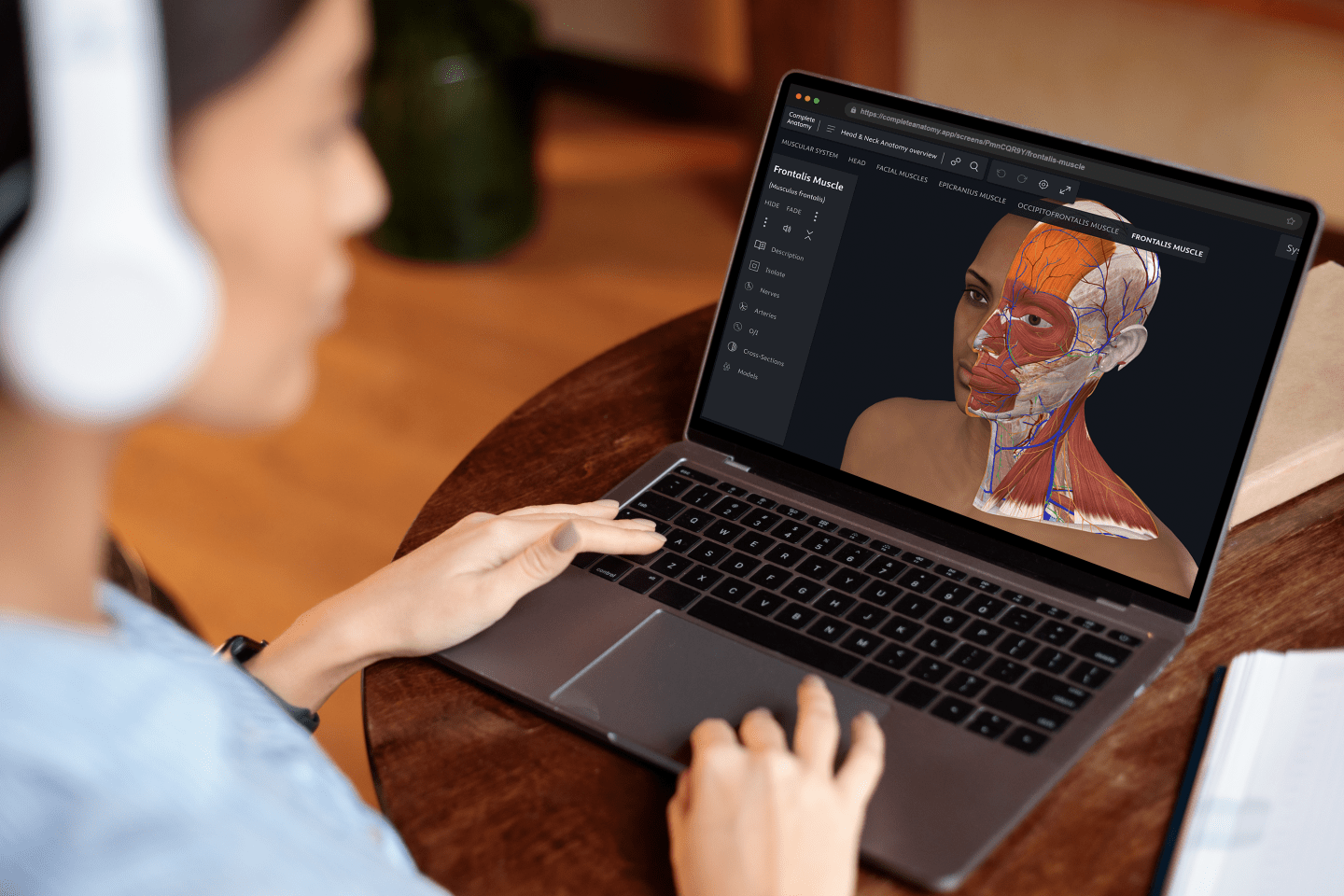
In recent years, countless technological platforms, simulation rooms, and apps have been introduced in classes (in-person or online) and in practical training as icons of the teaching revolution. In most cases, they have turned out to be entertainment elements presented as innovation, but which masked (and even impoverished) the traditional teaching method, eliminating or at least reducing the physical presence of students in hospitals and dehumanizing clinical practice and teaching. Faced with these elements, teachers and students risk being sidelined.
The amount of information and its availability dominate the learning process. True innovation would come from understanding and applying the concepts of learning neuroscience, even without the need for major technological advances.
Instructional design in medical education
The limited flexibility of medical school curricula, constrained by complex bureaucratic structures, is a reality we must accept, but it does not have to limit the development of teaching innovation, where the basic pillar is the combination of creativity and experience. At the level of academic management, a great leap was made with the emergence of campuses and virtual classrooms. A new channel of communication arose between students and academic institutions and professors. Access to teaching guides was facilitated, which represent an early form of what we now call Instructional Design (ID).
The role of the teaching guides
The teaching guides provide students with the necessary information about the elements that define the achievement of objectives for each course, the associated faculty, the subject content index, the general and specific competencies to be acquired, the evaluation system, and the basic information sources. But to evaluate the effectiveness of the teaching program, what was missing was a dynamic, ongoing feedback component throughout the academic year.
New learning models
Some of the most avant-garde university centers have chosen to develop routines in their curricula with direct intervention in the teaching method and in student learning. Once the objectives that students must achieve regarding knowledge acquisition, skills development, and professional competencies are established, it is time to consider how to achieve these objectives, since the path will not always be the same.
The impact of instructional design
Nowadays, every innovative teaching plan, especially if e-learning or a hybrid teaching modality has been chosen, must incorporate an ID. The ID is defined as a learning optimization system in which a series of phases are developed and evaluations of the method itself are carried out based on the acquisition of skills and knowledge, so that the teaching plan is systematically fed back according to achievements and the accomplishment of objectives. But it is of vital importance not to improvise or be carried away by fleeting trends, since this would lead to higher levels of frustration for teachers and students and inefficient learning, as well as poor management of time and available resources.
Teacher innovation strategies in medical education
There are different ID models based on learning theory. Each one presents strengths and weaknesses, and it will be the teacher, or more commonly the teaching team, who decides which one brings together the most beneficial elements to achieve the training objectives. Any teaching plan, taking into account the diversity of learning scenarios and the availability of human and material resources, must initially be based on four basic pillars:
- Didactic strategies: analysis of the teaching scenario and objectives, flipped classroom, cooperative/collaborative learning, diagnostic, formative, and summative assessments, spaced repetition, problem solving.
- Selection and adaptation of teaching resources: content index, use of textbooks, access to audiovisual resources (videos, images, podcasts), scientific articles, presentations, 3D models, clinical cases. The best solutions are integrative platforms with high connectivity among users and that gather most of the resources within the structure and optimal phases of effective learning.
- Learning scenarios: seminars, face-to-face lectures, online/hybrid teaching, clinical and/or laboratory practices, virtual or material simulation, congresses and meetings, tutorials, special interest groups.
- The student body: will be a determining factor in the development of the teaching plan, depending on the number of participants, their motivation, and involvement. The medical student must be aware of and take an active role in their own learning process. It is important to identify those strategic elements that truly add value and quality to knowledge. The recommendations, framed within a mentoring plan, consist of evaluating and reviewing the effectiveness of individual study techniques and are essential and complementary to the correct execution of a teaching plan. The performance of study habits aimed at short-term memorization is widespread, but it has also been shown to be completely ineffective. It is essential to instruct in long-term productive study strategies and encourage students to actively engage, reinventing the role of the engaged, self-directed student".
The future of teaching innovation in medical education
An innovative teaching plan will be one that integrates tools and strategic learning elements based on self-evaluation and on the improvement of the learning process. Teaching better and studying better are the foundation of academic performance. Synchronizing the teaching plan with a transversal approach to the subject is an ideal strategy to improve learning, as the complexity of the knowledge and the method to achieve the objectives develop in parallel. Optimizing learning, according to the results of systematic assessments of the method, helps to identify weaknesses in the teaching plan, allowing for effective action to be taken more or less immediately.
The theory of marginal gains
The design of an innovative teaching plan must be ambitious. This does not mean, however, that large and radical changes are necessary, but rather the application of the “theory of marginal gains,” which consists of introducing small (seemingly insignificant) habits and actions that collectively have a great impact on performance.
Furthermore, the design of a teaching plan must be ambitious when setting objectives and scenarios, beyond the subject taught, and in the proper use of technology. It must also be ambitious when asking questions. What is the real impact of a teaching innovation on Medical Education? Could we identify individual learning patterns based on Artificial Intelligence to optimize the learning process and increase performance in the areas and concepts most relevant to us? Would this represent an important step in inclusion and equity of opportunities? Could this performance optimization be reflected in a reduction of courses in the Medical Degree without negatively affecting the quality of education? Would there be greater availability of doctors? Would it be unnecessary to increase the number of medical schools?