



Elsevier Medical Education presents an interview with David Game, Senior Vice President in Medical Education Partnerships at Elsevier, exploring how AI is reshaping medical teaching and assessment, what adoption means for faculty, and where health education innovation is headed.
Based on your experience, what changes has AI brought about, and what new opportunities has it opened up in medical education?
I think AI is making significant changes in medical education, but we really are at the very beginning of the beginning. So, for what substantive changes it makes, I think it’s far too early to say. What I do think it has shown us is that any given student with access to ChatGPT or Claude or whatever can answer pretty much any assessment question. The big question for me is, how are we going to respond in terms of assessment? I think that is the question that it’s opened up for us.
As an expert in educational technology, what is the main challenge currently faced by developers of AI platforms designed for medical education?
Challenge 1 – Content trustworthiness
Firstly, the major challenge is ensuring that the underlying material that’s feeding the AI is trustworthy and that the combination of the RAG architecture, which I assume most content holders are using, and the level and quality of evaluation is sufficient to avoid a gross mischaracterization or hallucination in the material.
Challenge 2 – The chatbot interface problem
I think the other challenge that’s facing designers of AI platforms, which is beginning to emerge in literature and in conversations, is whether the chatbot interface is the right interface for learning. I was reading an interesting piece just this morning saying that the very text-heavy nature of a chatbot interaction and the way generative AI tends to say, "Do you want that as a one-page summary?" and so on, is actually not very helpful for learning because it’s the same effect as being on the internet and spending eight hours looking at videos of cats. For learning, there needs to be a focused experience that pulls students back into the underlying material, not something that keeps them going, "Oh, maybe I’ll look over here.” I think what we’re going to see from a product design perspective are different interfaces for different problems and we’re going to move away from the initial chatbot experience. I think we’re going to see different ways of leveraging the underlying power of AI that isn’t just a chatbot.
Today’s students are digital natives, and these technologies are part of their everyday lives. However, do faculty members have sufficient training (and engagement) to adopt AI in their daily teaching practice?
Students are AI consumers, but not always experts
It is absolutely clear that generative AI is part of the daily life of young people, but it’s part of their daily life in two different ways and I think this is a really important point that we need to wrestle with. It’s part of their daily education life and they’re using it to answer questions as part of their learning. But it’s also part of their daily life in terms of how they interact with the world. There’s a whole lot of social interaction around how students are using these tools that isn’t just about teaching and learning. The other point is, it’s all very well to say that students are digital natives, but there’s a world of difference between engaging with generative AI as a consumer versus understanding how large language models work, how different technologies work, and so on. I think the vast majority of students are simply consumers of generative AI. They’re not particularly well versed in how it works. They’re not going to be able to talk about transformer architectures, attention, and all sorts of other things.
Faculty are primarily thinking about control, not innovation
Secondly, yes, faculty are and have always been, I think, one or more steps behind students in terms of consumer technologies. The conversation I hear most has two aspects. The first is “How do we control ChatGPT and students’ use of it?” It isn’t “How do we use ChatGPT in sophisticated ways to improve teaching and learning?” Then, the second aspect is that faculty don’t have the time to explore generative AI as a truly innovative teaching tool. There are a very small number of people who are actually doing this, but the vast majority are essentially thinking about this in a disciplinary way. How do we control it? How do we manage it?
The real challenge: keeping pace with AI
Thirdly, I would say that faculty, and maybe students as well, are really engaging with generative AI as a summarization, answer generation model, which is one, if not two, steps behind where agentic AI is really going, like workflow-embedded use of AI. It’s almost as if faculty are fighting the 2022 issues around the first introduction of ChatGPT versus thinking about what the next step of generative AI is. The challenge is it’s all moving so fast that literally every day there are new developments. It’s a full-time job keeping up with and understanding the latest advances in generative AI.
"Creating high-quality questions is a very difficult thing to do. It’s very, very time-consuming. Generative AI essentially gives you the opportunity to create many more questions at a much higher rate."
David Game, SVP in Medical Education Partnerships, Elsevier | Elsevier Faculty Hub, June 2026
In this same context, what advantages does AI offer from the faculty’s perspective in medical education? How does it compare to traditional teaching tools?
I think there will turn out to be many ways in which AI offers advantages to faculty. At the moment, using generative AI is an effective way of creating large amounts of pretty high-quality content. For example, faculty have always wanted to create more assessment items for students because students love assessment items and they love to use them to help them understand how they’re doing in exams. Creating high-quality questions is a very difficult thing to do. It’s very, very time-consuming. Generative AI essentially gives you the opportunity to create many more questions at a much higher rate.
AI as a force multiplier for time-intensive tasks
It’s really a force multiplier for complex tasks which have historically taken too much time to do and therefore, have been sort of off limits. So, currently, that is the key benefit – thinking of things that you would have done in the past but were too time-consuming to actually be done. Generative AI gives you the tools to do that, undoubtedly.
One of the benefits AI could offer students is the development of critical thinking. In what specific ways will this “training” benefit them when they begin interacting with patients in their professional practice?
The risk – Cognitive offloading
With regard to critical thinking or clinical reasoning, AI is very much a double-edged sword. I think that unsophisticated users may actually be reducing their critical thinking. There’s this term, ‘cognitive offloading’, where generative AI is carrying a lot of the weight that, in the olden days, people would do for themselves. So, in that respect, AI may be the enemy of critical thinking or clinical reasoning.
The opportunity – AI as a structured thought partner
However, if used in a more sophisticated way, I think generative AI could be a really sophisticated thought partner, but it requires the self-discipline, the structure, and the organization to use it in that way. For example, you might use Claude to challenge a student around their particular answers: "Why have you answered it in this way?" "Would you answer this differently if …?" We’ve done some very experimental work on this topic.
I think that when you can use generative AI to replicate the same types of mental activities that go into clinical reasoning, it gives you a very effective way of generating quite a lot of material, which was not previously possible – economically or in terms of resource allocation. Someone who’s running a course for 300 undergraduates can’t be sat beside each one of them as they work through problems. But generative AI, properly used and with a degree of sophistication, can be that needling tutor that can go, "Yeah, I get that you’ve given the answer B, but explain why the answer is B." That opportunity exists, for sure.
"If used in a more sophisticated way, I think generative AI could be a really sophisticated thought partner, but it requires the self-discipline, the structure, and the organization to use it in that way."
David Game, SVP in Medical Education Partnerships, Elsevier | Elsevier Faculty Hub, June 2026
From an institutional perspective, where should universities of health sciences be looking to effectively and responsibly integrate AI into the training of future healthcare professionals?
I wouldn’t want to tell anyone how they should run their institution, but I think if AI is essentially going to burn traditional online assessment to the ground by making the answer to any question available to anybody, regardless of their underlying knowledge, we need to think very carefully about two pieces. One is academic integrity and related to that is assessment. Do students truly know what an exam tells us they know?
Assessment integrity: ensuring AI-era graduates are genuinely qualified
At the root of assessment is the idea that well-constructed questions are differentiators of students who know and understand things from students who don’t know or understand things. Essentially, exams are a public badge showing that this particular person is now qualified to perform these particular sets of tasks. If those qualifications and the underlying assessment in them are invalidated, i.e., you can graduate with a degree in medicine and not be able to execute those tasks in an appropriate and effective way, the loss to the public is enormous. When you go to see a doctor, a surgeon, or some sort of medical professional, you are relying on the fact that they’ve been through a process of education and their qualification is that public statement of trust that they’re able to execute this. We need to think really carefully about this because we need to be confident that people leaving medical or nursing school actually know the things that they purport to know and are therefore competent and capable of being a great doctor or nurse.
Finally, what are the key trends or developments that will shape the future of AI in health education?
Conversational AI + 3D avatar simulation
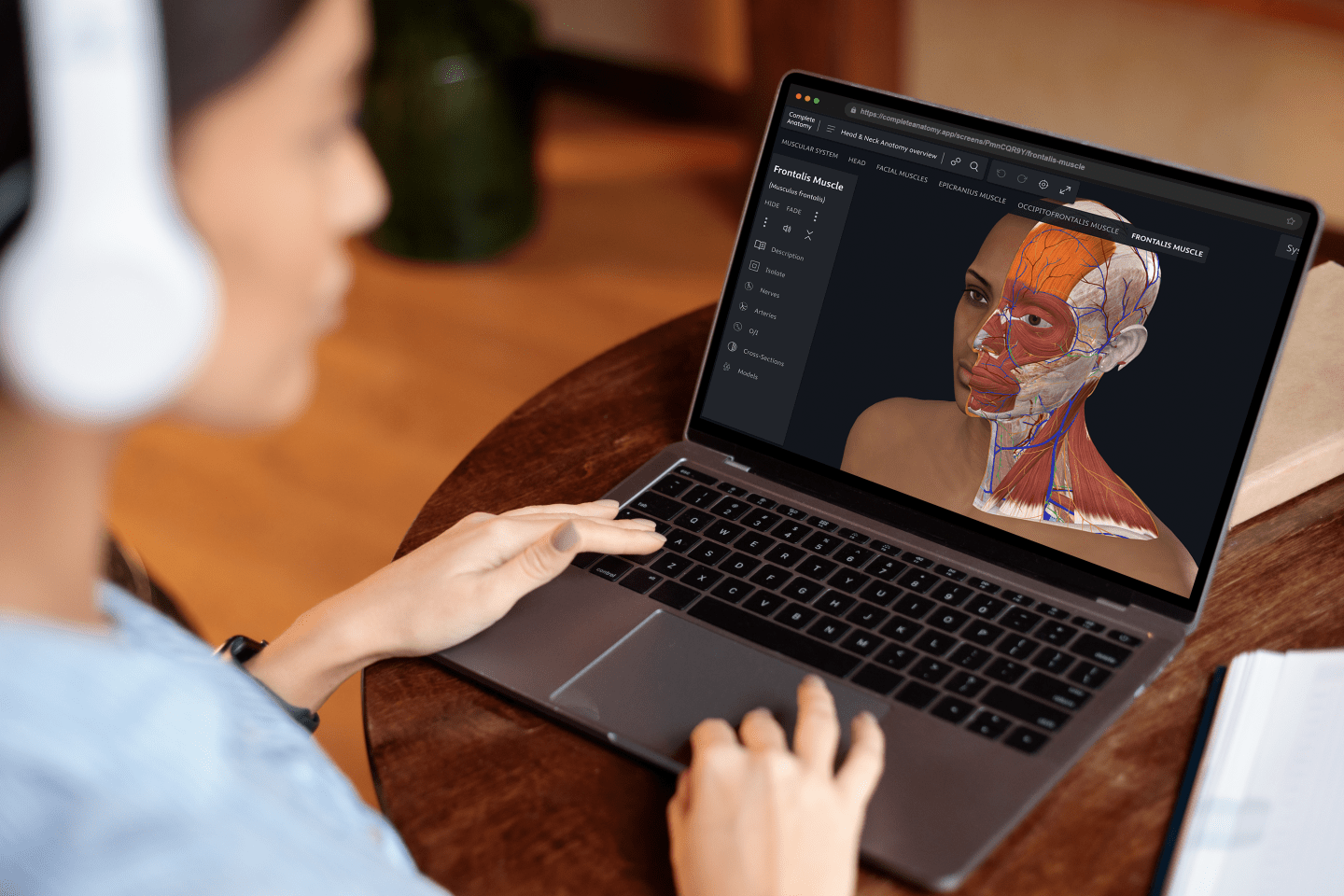
I have a particular hobby horse around this because I think that there’s an opportunity for multiple technologies to actually come together to create forms of teaching and learning that did not previously exist. I was on the phone earlier this morning to a Dean of a Spanish medical school and we were discussing this idea that is it possible to create authentic avatars with conversational skills to enable students to practice diagnosis in an immersive, engaging 3D environment where the dialogue between that avatar and the medical student is both authentic and educationally structured. When we think about one of the hardest things to teach and to learn, it is that engagement with patients. There are hard skills, like the biochemistry, but also, a lot of medicine is practiced in an area of considerable ambiguity. For example, a patient comes in and they’re slurring their words. Is it that they have very early symptoms of Lou Gehrig’s disease? Is it something else? Students need to be able to practice these skills. It feels as if the combination of immersive 3D technologies and AI, but most importantly, conversational AI, could create a new way of teaching these types of skills, which, historically, have been incredibly difficult to do.
There’s an economic element here whereas it is very expensive to do but also, it’s very hard to understand and create meaningful ways of engagement. Creating a multiple-choice question about a patient whose self-description is ambiguous or very vague is really difficult to do and not terribly helpful because in the end, the answer isn’t just ‘B’. The answer is a whole set of things other than ‘B’. The ability to create this engaging, interactive model with 3D avatars that are authentic, with authentic voices, and allow medical students to practice the diversity of patient experiences that they’ll have, rather than experiencing the normative version of this or that, could be incredibly powerful.
The goal: more empathetic clinicians through immersive AI
I also think that there’s a world of complexity and challenge that we need to engage with, but I think it would be worth it because we would have better trained, more empathetic doctors and nurses at the end of it, which has always been such a challenge. So, that’s where I would put my bet on the future of AI in healthcare education. But it isn’t AI alone. It’s AI with the immersive technologies that we know and we, at Elsevier, actually have.

Leave a Reply