Discover how University of California Irvine Sue & Bill Gross School of Nursing partners with Osmosis to free-up faculty time and deepen student learning.

The Program
University of California Irvine Sue & Bill Gross School of Nursing
The University of California Irvine Sue & Bill Gross School of Nursing is committed to bridging the provider gap through the comprehensive education of highly skilled practice-ready Nurse Practitioners. UCI is providing a uniquely empowering NP education experience that focuses on the importance of identifying challenges in clinical practice, determining effective solutions, and disseminating information in a meaningful way for quality improvement projects. As the School of Nursing Clinical Faculty Practice Director, Dr. Candice Whealon plays a crucial role in continuing this mission while supporting NP students through a fast-paced curriculum in a hybrid structure.
The Challenge
Equipping faculty with dependable resources that align with learning objectives and support an accelerated program in a flipped classroom environment.
In July 2020, when Dr. Whealon returned to UCI to teach, the hunt for new resources to support DNP faculty and their students started. UCI’s DNP faculty actively practice medicine, so effective support for faculty’s time is a pressing need. “We are juggling running a practice, taking care of patients and wearing an academic hat,” explains Dr. Whealon.
Apart from the demanding schedules of faculty members, the condensed 10-week courses require students to learn a lot of essential information quickly. “It’s the nature of a quarter program, it is so much information in a little amount of time,” shared Dr. Whealon. Consequently, the DNP program placed a paramount emphasis on the availability of reliable, concise, and easily digestible student resources to facilitate student success.

The Solution
Integrating Osmosis videos as primary coursework to teach and clarify complex DNP concepts and while utilizing Osmosis assessment items and high yield notes to cement knowledge and keep students on track.
Dr. Whealon’s personal use of Osmosis, coupled with familiarity through the already established partnership between Osmosis and UCI’s Registered Nurse program, made the choice to use the learning tool in NP classrooms straightforward.
When building out coursework, faculty seamlessly integrated Osmosis videos into UCI’s learning management system, Canvas, to provide students with easily accessible content that directly aligned with learning objectives. Leveraging Osmosis’s customizable and shareable playlists, faculty were able to conveniently organize a comprehensive compilation of concepts for an entire week in one centralized location. As part of her instructional approach, Dr. Whealon ensures students receive the required Osmosis content on a weekly basis, enabling them to enhance their understanding of the topics discussed in class.
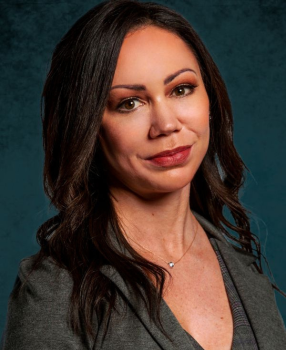
“I go through and create structured playlists for students. I utilize Osmosis in every module.”
Dr. Candice Whealon, DNP, APRN, FNP-C, School of Nursing Clinical Faculty Practice Director
“I go through and create structured playlists for students,” says Dr. Whealon, “I utilize Osmosis in every module.”
In addition to videos, utilizing Osmosis’s high yield notes and flashcards is helping students solidify key concepts and stay focused. “Osmosis’s high yield notes are phenomenal and I love the flashcards. They are leveled really well for NP students,” says Whealon.
During faculty lead study group hours, Dr. Whealon often refers students back to the high yield notes, “Especially my students that get lost in the weeds. I’ll bring them back to the high yield notes and talk through them with them.”
The Result
Increased teaching efficiencies and positive student outcomes have led to DNP faculty using Osmosis as primary coursework and continuously integrating more Osmosis tools each quarter.
Once Osmosis was introduced to students, the need for faculty-made video content decreased. Osmosis videos are now mandatory content for students in pathophysiology courses, saving faculty time by eliminating the need to create their own videos on the same subjects. “DNP Faculty are using Osmosis more and more because we were spending so many hours doing our own asynchronous content, and then updating it and redoing it. The quality of faculty-made videos is just not comparable to what Osmosis can do,” explains Dr. Whealon.
“DNP Faculty are using Osmosis more and more because we were spending so many hours doing our own asynchronous content, and then updating it and redoing it. The quality of faculty-made videos is just not comparable to what Osmosis can do.”
Dr. Whealon plans to incorporate Osmosis Clinical Sciences videos into NP clinical education courses. “This will be my first year applying Osmosis to practicum courses,” says Dr. Whealon. “The tool is great. Students love the visuals and they are done so well. I really try to integrate Osmosis more and more every quarter.”
The reception from students has been positive and continues to gain momentum with each passing quarter. “Students are getting more comfortable with online learning. I see increased Osmosis buy in each year that I teach pathophysiology,” says Dr. Whealon. In addition to primary coursework, students are actively utilizing Osmosis during group discussions to enhance their understanding and address challenging concepts. Dr. Whealon emphasizes that “Osmosis really helps them clarify topics within the textbooks.” Faculty have found that “Osmosis videos have really helped with student engagement, especially when we break them out into groups.”
“Osmosis really helps them clarify topics within the textbooks.” Faculty have found that “Osmosis videos have really helped with student engagement, especially when we break them out into groups.”
Allocating dedicated time for reviewing Osmosis assessment items and facilitating peer discussions has proven effective in fostering confidence among NP students when presenting and explaining their patient care plans in front of the class.