Discover how the University of Toledo College of Medicine and Life Sciences worked with Osmosis to create a strong longitudinal curriculum partnership that supports student and faculty needs.
The Program
The University of Toledo (UToledo) College of Medicine and Life Sciences is committed to improving health in the Ohio communities and regions they serve. UToledo focuses on educating excellent clinicians and scientists by providing high quality, patient-centered care and nationally recognized research. As the Associate Dean for Foundational Sciences and an Associate Professor, Dr. Coral Matus has been integral in continuing this mission while supporting faculty needs.
The Challenge
Providing faculty with reliable resources that match learning objectives and help equip students for higher-level learning.
New curriculum formats implemented in 2017 emphasized a transition toward flipped classroom models, designed to maximize the impact of limited in-person instructional time. This approach shifted foundational knowledge acquisition to pre-class learning, requiring learners to engage with structured preparatory materials prior to attending instructional sessions, and post-class work to cement knowledge. Dr. Matus recalls, “Faculty were making a lot of learning modules on their own, but as we were exploring, we found that there are a lot of good things out there already. Why reinvent the wheel?” Following this insight, the team prioritized identifying high-quality, evidence-based on-demand resources that aligned with their curriculum objectives.
The Solution
Pairing Osmosis videos with UToledo’s learning objectives to create a resource list for struggling students while providing faculty with high quality pre-work material, allowing them to begin lectures at a higher level and dedicate more time to application-based learning.
Osmosis caught the eye of Dr. Matus at the Association of American Medical Colleges Annual Conference in 2019 after interacting with the team and seeing how learning theory plays a foundational role in the platform’s content. After moving forward with the partnership, Osmosis worked closely with UToledo to align their curriculum with Osmosis content. “We have a whole spreadsheet with each of our learning objectives for the whole system linked to an Osmosis video,” explained Dr. Matus.
For students, the adoption was seamless. Students were assigned the Osmosis’s learning theory video series on their second day of the semester. This introduced them to the platform immediately and created a strong foundation for learning in medical school. “We assign four learning theory videos on day two of their curriculum. We talk about how to learn, and what types of learning are best,” shares Dr. Matus. To ensure these vital learning strategies were absorbed, faculty took it a step further and incorporated learning theory into their first quiz. “The videos play into self-directed learning, lifelong-learning of the master adaptive learner type platform, which I really like,” states Dr. Matus.
On the faculty side, Osmosis was presented as an optional supplemental resource to lift the burden of having to make their own content. To assist in faculty adoption, UToledo held a presentation on different ways educators could utilize Osmosis in their curriculum. “When faculty come to me and say they need somebody to teach this or they’re struggling to get a topic in, I ask if they have looked at Osmosis,” says Dr. Matus.
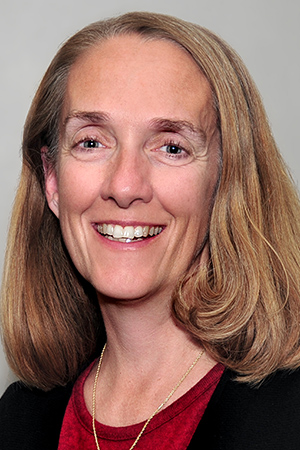
“When faculty come to me and say they need somebody to teach this or they’re struggling to get a topic in, I ask if they have looked at Osmosis.”
Dr. Coral Matus, MD, FAAFP, Associate Dean for Foundational Sciences, Associate Professor
The first year goal was to have Osmosis be a the top resources faculty utilize. Dr. Matus aimed to get faculty to a place where on their own they would reach for the platform and say, “‘Okay, let me go see what Osmosis offers. Is there anything that can be helpful?’”
The Result
Osmosis is the first choice resource for the majority of faculty, and videos, questions, and other Osmosis assessments are used by students regularly to prepare for exams and bridge knowledge gaps.
After its implementation in 2020, Osmosis’s adoption has continued to rise. Students now see Osmosis again in their first week after taking a customized assessment designed to show their own knowledge gaps. After identifying their areas of focus, students are provided with Osmosis video links that pair with the objects they need to strengthen. “I always tell students, if you come to class and you’re struggling with concepts and missing some basics, go back to the learning objective spreadsheet and look at the Osmosis video links. A lot of times, it gives a student the foundation, so that they can understand things better,” explains Dr. Matus. These assessments are also repeated at the end of the semester so students can review their growth and locate their next areas of focus.
Students have also incorporated Osmosis tools into their regular quiz and exam prep. “Our students were really struggling with how to study for USMLE® Step 1 amid the pandemic. Osmosis was a little bit of an olive branch we could offer to them,” explains Dr. Matus. “We find that students before assessments are using Osmosis as a kind of check for themselves. We see the usage of Osmosis assessment items go up right before our assessments, and especially before exams.”
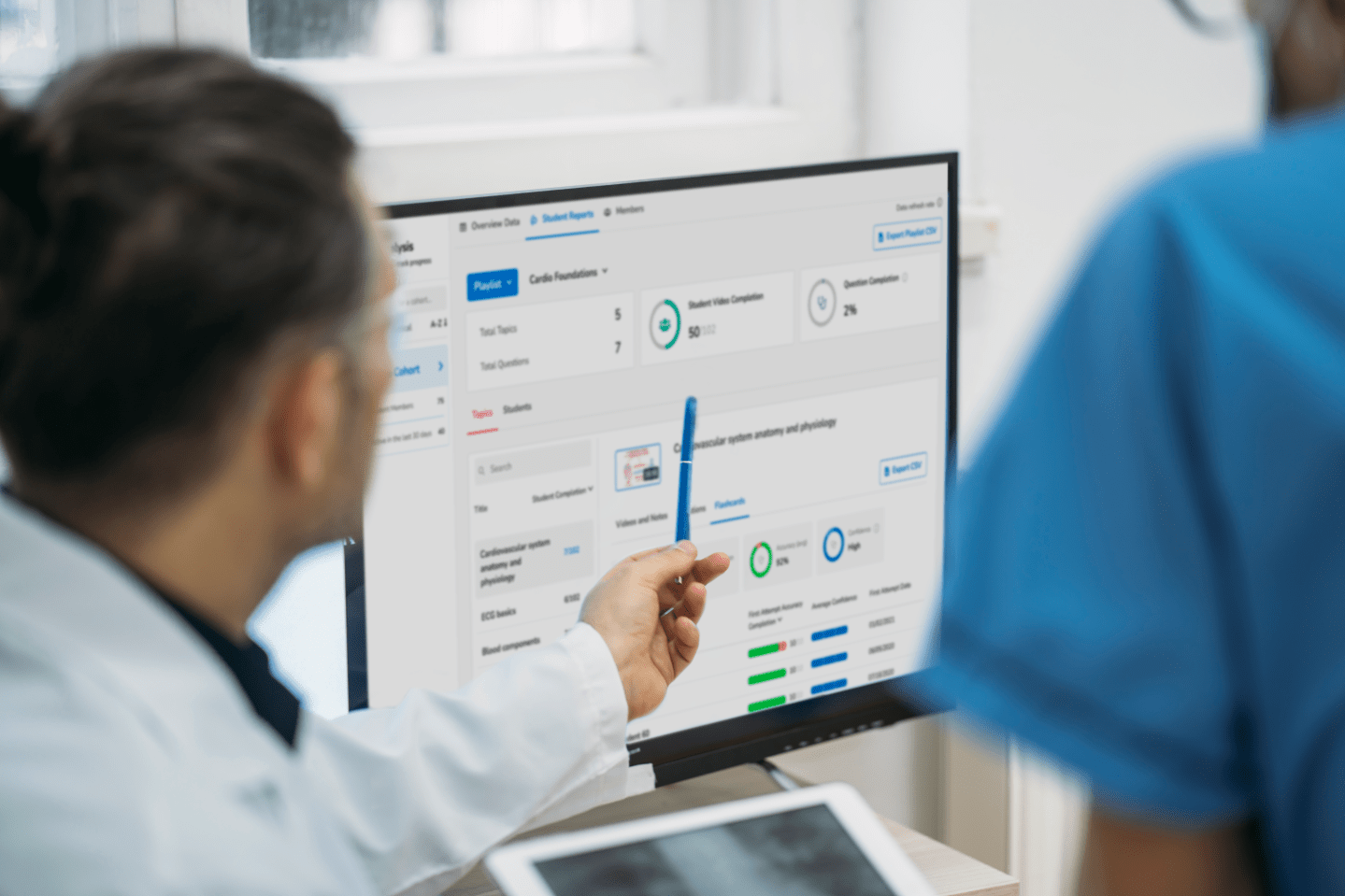
As for faculty, year two usage was much stronger as familiarity with the platform has increased. Faculty now integrate Osmosis in a variety of ways. Some directors create playlists of engaging, high-quality Osmosis videos and assign them as pre-work to prime student learning. This allows faculty to begin lectures at a higher level and allocate more time for application-based learning. Others put detailed illustrations from Osmosis videos and high-yield notes into their presentations. Additionally, when a student is struggling with a concept, faculty refer them to an Osmosis resource.
“The vast majority of our systems director faculty think of Osmosis as a primary resource when looking for supplemental content. It’s their first go-to.’”
As they discover new ways to incorporate the materials into their curriculum, many faculty have embraced Osmosis. Dr. Matus has found that “the vast majority of our systems director faculty think of Osmosis as a primary resource when looking for supplemental content. It’s their first go-to; ‘Okay, I need something to supplement this, let me see what Osmosis offers.’”